Top Mamdani deputy mayor doesn’t rule out expanding metered parking to help close budget gap

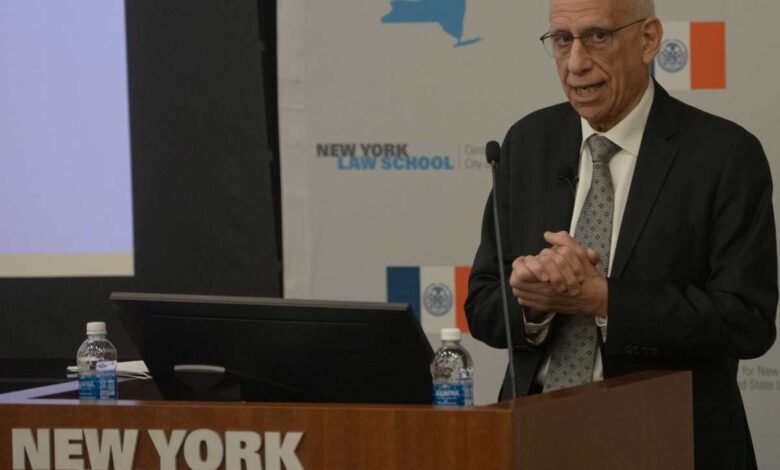

First Deputy Mayor Dean Fuleihan, Mayor Zohran Mamdani’s top cabinet member, said on Thursday that a proposal to greatly expand metered and permitted parking is among possible revenue raisers the administration is considering to help close a sizable budget gap and fund its priorities.
Photo by Lloyd Mitchell
First Deputy Mayor Dean Fuleihan, Mayor Zohran Mamdani’s top cabinet member, said on Thursday that a proposal to greatly expand metered and permitted parking is among possible revenue raisers the administration is considering to help close a sizable budget gap and fund its priorities.
Fuleihan, in response to an audience question during a March 5 event at New York Law School, did not rule out charging more New York City drivers to park on city streets, an idea floated by the Center for an Urban Future think tank in a policy paper last month.
“It’s not a no,” Fuleihan said of the proposal. “We should be looking at all these things.”
When asked what, if any, conversations City Hall is having around the proposal, mayoral spokesperson Jeremy Edwards appeared to confirm that the administration is considering it.
“The Mamdani administration is committed to modernizing how we manage our curbs — reforming metering strategies and rethinking how curb lanes can better serve all New Yorkers,” he said in a statement.
Fuleihan expounded on his comments during a scrum with reporters following the event.
“It’s a very good policy question and one that needs to be discussed,” he said. “We also have many needs that we want to do in surface transportation, that we want to make improvements, and that’s a real possibility as a source.”
The proposal, in addition to expanding metered parking to more of the city’s three million spaces, calls for implementing dynamic parking and creating a residential permit system.
In its proposal, the think tank says the city currently meters only 80,000 of its three million street parking spaces, generating $258 million annually — a reality it calls a “costly missed opportunity.” The group argues that if the city were to meter just 25% of its currently free parking spaces, it would generate at least $1.21 billion in additional yearly revenue.
It also recommended that the city introduce dynamic pricing for meters. Under that model, the city would raise parking meter rates during peak times of day, such as the morning rush hour, and lower them during less in-demand times to raise more money.
Furthermore, the think tank suggested implementing a permitting system for residential parking as yet another way to bring in more dough.
However, Fuleihan stressed that charging more drivers for parking in and of itself will not be enough to close the city’s $5.4 billion budget deficit.
“They’re not going to address the $5.4 billion problem … which needs a broad-based structural change,” he said.
When Mamdani unveiled $127 preliminary budget proposal last month, he said there are two paths to close the fiscal gap: either getting Albany to raise income taxes on millionaires and the corporate tax rate, or raise locally-contolled property taxes by 9.5% and dip into the city’s general reserve. The ultimatum drew immediate backlash from a slew of outerborough elected officials and has been a non-starter with Gov. Kathy Hochul.
Jonathan Bowles, the Center for an Urban Future’s executive director, said in a statement, “It’s smart that the administration is giving this idea a close look.”
“Given the deficit that the city is facing, the mayor will need to consider multiple options for generating new revenues,” he added. “Expanding metered parking may not get the city all the way there, but it can help close a big chunk of the budget gap.”