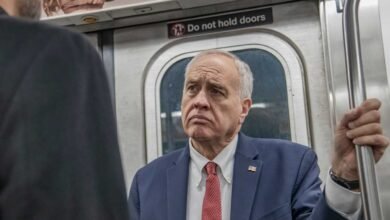
MAMDANI’S FIRST 100 DAYS: NYC Schools reopen after snow day with 12,000 teachers out, student attendance at 63%

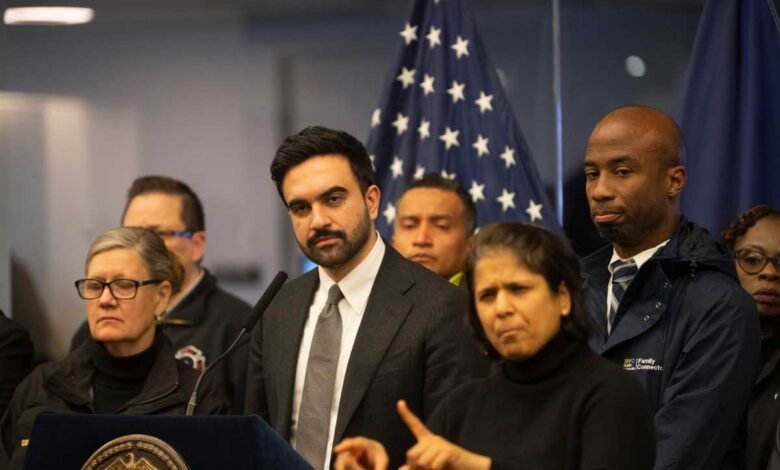
Monday, Feb. 24, marked the 55th day of Zohran Mamdani’s term as mayor. amNewYork is following Mamdani around his first 100 days in office as we closely track his progress on fulfilling campaign promises, appointing key leaders to government posts, and managing the city’s finances. Here’s a summary of what the mayor did.
As New York City continued digging out from the historic blizzard, public schools reopened on Tuesday with 12,000 teachers absent and about 63.3% of students returning — a decision that Mayor Zohran Mamdani defended as necessary, but one that raised concerns among City Council leaders.
Speaking at a snowstorm update briefing on Feb. 24, Mamdani said the city was not in a position to pivot to remote instruction after midwinter break, noting that it could not ensure students had access to devices, making a last-minute switch to remote learning unworkable.
He argued that schools play a critical role beyond academics, providing meals, mental health support, and childcare for working families, services he said were especially important once conditions were deemed safe after students had their first traditional snow day since 2019 on Monday.
The mayor credited more than 8,000 Department of Education staff who worked through the weekend clearing snow, restoring heat and power, and preparing school buildings for reopening. Schools Chancellor Kamar Samuels said more than 5,000 substitute teachers were brought in to cover absences after the call-outs of 15.38% of the workforce.
Transportation disruptions appeared limited despite lingering storm impacts. City Hall said about 150,000 students typically rely on school buses, but only 78 complaints were reported Tuesday, with 15 of roughly 8,000 routes experiencing delays.
Still, the decision to reopen drew concern from lawmakers representing districts hit hardest by the storm.
Council Speaker Julie Menin said at a separate press briefing on Tuesday that she heard from numerous council members whose constituents were uneasy about sending children back to school so soon.
“I heard from many council members, including Kamillah Hanks in Staten Island and Kayla Santosuosso of Brooklyn, who were hearing from parents concerned about getting their children to school and who really wanted the flexibility of a remote option,” Menin said. She added that flexibility should be considered during future major storms.
Recently-elected Council Member Santosuosso on Tuesday said that despite the Department of Sanitation “moving mountains” overnight, it still wasn’t enough.
“I’ve got teachers telling me the staff absences outweigh the sub headcount, and no shortage of hellish commutes for parents, kids, and teachers,” she posted on X.

The school reopening came as the city continued an all-hands response to what Mamdani called the “snowstorm of the decade.” Some neighborhoods, particularly on Staten Island, recorded 28 to 30 inches of snow, with high winds creating deep drifts that slowed cleanup efforts.
City officials said 2,600 sanitation workers operated in successive 12-hour shifts, deploying more than 3,000 pieces of equipment and spreading over 143 million pounds of salt to plow every street across the five boroughs at least once. Sanitation crews also cleared thousands of crosswalks, fire hydrants, and bus stops, with additional work continuing due to blowing snow.
An enhanced Code Blue remained in effect through Wednesday morning, with outreach teams making more than 250 placements for homeless New Yorkers since the weekend. Trash collection was suspended on Tuesday and set to resume on Wednesday evening, while alternate side parking was suspended through the end of the week.
As temperatures rise later this week, city officials warned of falling snow and ice from rooftops and urged property owners to clear roofs safely.
Education: CUNY professor’s hot-mic moment was reprehensible, says mayor
Mayor Mamdani and Chancellor Samuels also faced questions Tuesday about a controversy involving a Hunter College professor, after a video surfaced showing the faculty member inadvertently cutting off a Black eighth-grade student who was raising concerns about the potential closure of her Upper West Side school during a Community Education Council meeting on Feb. 10.
“They’re too dumb to know they’re in a bad school,” Allyson Friedman, an associate biology professor at Hunter College, reportedly said on Zoom while her mic was live.
Friedman later told the New York Times that her full remarks “make clear these abhorrent views are not my own, nor were they directed at any student or group.”
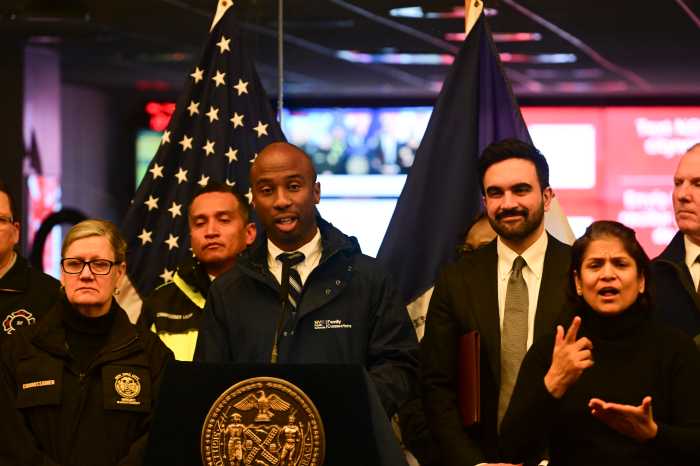
When asked about the appropriate punishment for the remark and what it says about tensions surrounding the Upper West Side school relocation, Mamdani called the comment “reprehensible” and said it reflected “the exact kind of language that makes students feel as if they don’t belong within our public school system.” He added that the city is “looking to build a public school system that is home for each and every person that calls this city home.”
Chancellor Samuels echoed Mamdani, calling the remark “abhorrent” and saying students “deserve so much better.” Samuels said the administration will work with the superintendent and school communities to repair any harm and strengthen teachers’ ability to address underlying issues in city schools.
Pressed on whether Friedman should be fired, Mamdani said it would be part of the investigation into next steps, as Samuels had outlined.
Appointments: Mamdani names Sideya Sherman City Planning Director, keeps key housing leaders
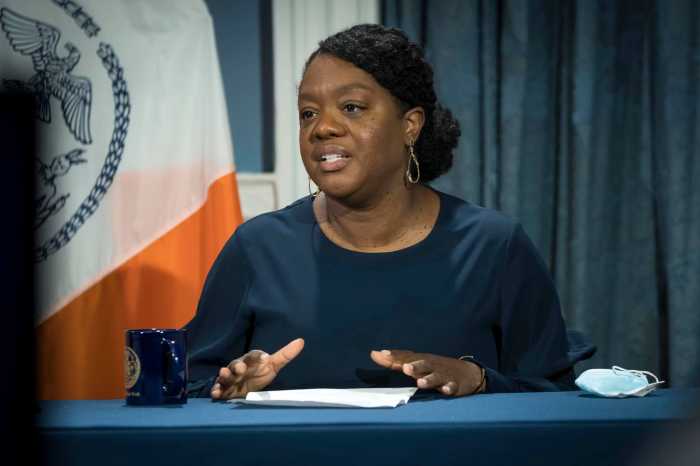
Earlier Tuesday, Mamdani announced that he had appointed Sideya Sherman to lead the Department of City Planning and the City Planning Commission, while reappointing Eric Enderlin as President of the Housing Development Corporation and Edith Hsu-Chen as DCP Executive Director.
Sherman, formerly the city’s Chief Equity Officer, has a long history in urban planning and affordable housing, including leadership roles at NYCHA and the Taskforce on Racial Inclusion and Equity.
Hsu-Chen has been DCP’s executive director since 2022 and played a role in the “City of Yes” zoning reforms aimed at promoting housing, sustainability, and economic development. Enderlin, meanwhile, has led HDC since 2016, overseeing billions in municipal housing bonds and the financing of thousands of affordable homes.
The appointments come as the city implements new initiatives to speed up affordable housing construction, including the Land Inventory Fast Track (LIFT) and the Streamlining Procedures to Expedite Equitable Development (SPEED) task forces. Last week, DCP launched the first public review under the Expedited Land Use Review Procedure (ELURP) for an affordable housing project in Mott Haven, Bronx.
Mayor Mamdani framed the changes as central to his administration’s affordability agenda, while Deputy Mayor for Housing and Planning Leila Bozorg called the leadership team “critical to shaping the lived reality of our city.”
“Sideya Sherman understands that planning is not an abstract exercise – it is about whether working people can afford to live in the city they call home. Her record in community engagement and equitable development makes her exactly the leader we need at City Planning,” said Mamdani.
“I’m confident that she and Edith Hsu-Chen will move with urgency to deliver affordability, advance fair housing and build a city that works for everyday New Yorkers — not just the wealthy and well-connected,” Mamdani continued. “Eric Enderlin will continue to lead HDC’s groundbreaking work as the nation’s largest municipal Housing Finance Agency, bringing innovative financing tools to bear to build a more affordable city, starting with the homes that dot the five boroughs.”
Annemarie Gray, Executive Director of Open New York, said Sherman’s appointment comes at a pivotal moment for the city’s housing policy. “New York City’s housing shortage is inextricably linked with its history of exclusionary zoning, and solving one means confronting the other,” Gray said. She added that Sherman “brings a deep understanding of the connection between racial equity and fair housing,” and that recent voter-approved charter changes give the city new tools to approve more homes faster.