Imperiled ‘cloud jaguar’ spotted in Honduran mountains for the first time in a decade


Imperiled ‘cloud jaguar’ spotted in Honduran mountains for the first time in a decade
These images, conservationists say, are evidence that wildlife corridors are paying off
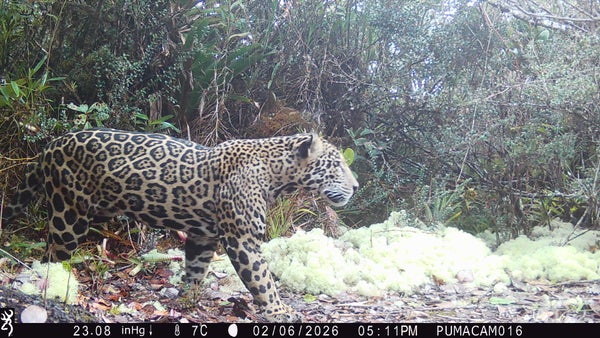
A healthy male jaguar captured on camera in Honduras’ Sierra del Merendón mountain range
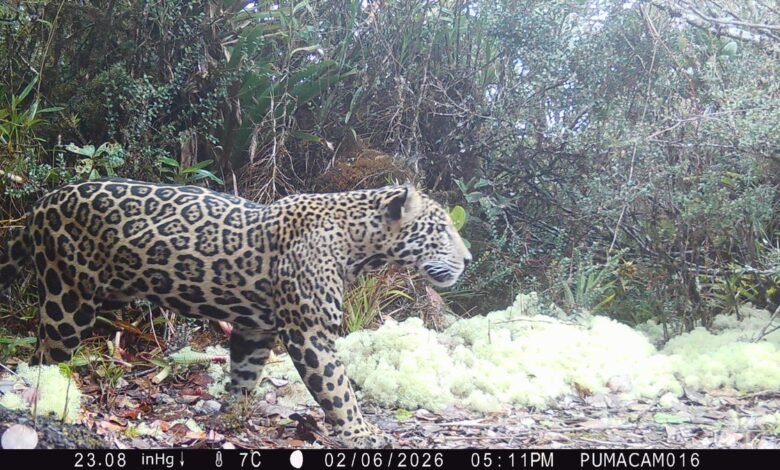
In newly released images, a rare “cloud jaguar” slinks through dense foliage of the jungle-covered Sierra del Merendón mountains in Honduras. The sighting offers a sliver of hope for the imperiled big cat, which is struggling to survive across its range in North and South America, largely because of a combination of habitat loss and poaching.
As farmland, deforestation and human development have fractured its habitat, the jaguar lost as much as an estimated 25 percent of its adult population between 1995 and 2016, according to the International Union for Conservation of Nature and Natural Resources (IUCN), which lists the species as “near threatened.”
Jaguars, whose coats have characteristic spots and rosettes, are the only living members of the genus Panthera that are native to the Americas. (The other members are lions, tigers, leopards and snow leopards.)
On supporting science journalism
If you’re enjoying this article, consider supporting our award-winning journalism by subscribing. By purchasing a subscription you are helping to ensure the future of impactful stories about the discoveries and ideas shaping our world today.
The newly released images, taken in February, show a rare, young male “cloud jaguar”—a jaguar living at high elevations—in the Sierra del Merendón, a key connectivity corridor between jaguar populations in Honduras and Guatemala. It’s the first time scientists say they have documented a jaguar on camera in these mountains in about 10 years.
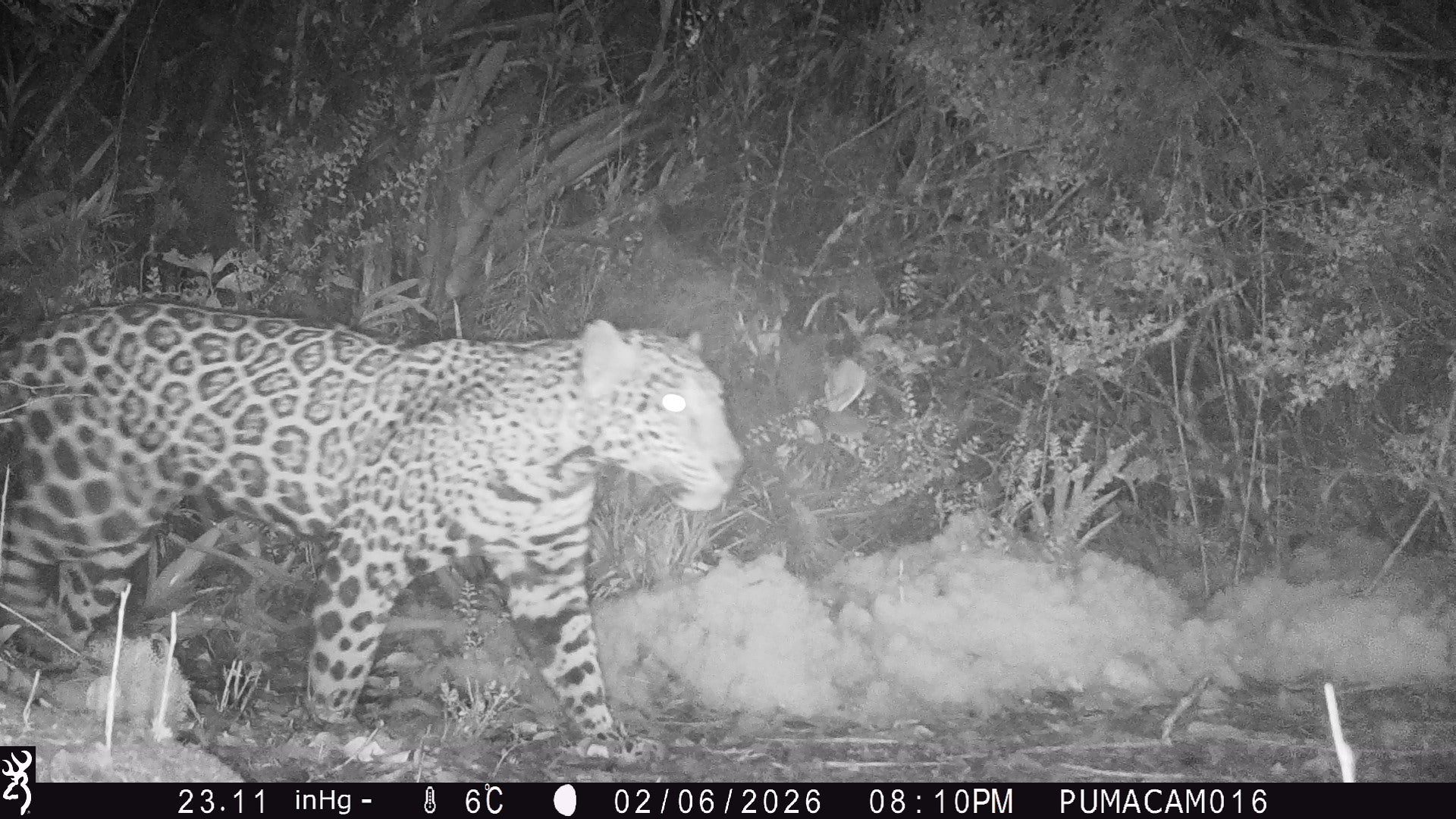
“For jaguars, connectivity is paramount,” says Allison Devlin, director of the Jaguar Program at Panthera, an environmental organization that took the images. “The Merendón Range functions as a stepping stone in the Jaguar Corridor stretching from Mexico to Argentina, meaning one thriving individual there signals the corridor’s potential viability.”
The sighting also offers evidence that conservation efforts—such as antipoaching patrols, introducing prey animals, including iguanas and peccaries, and protecting this wildlife corridor—are having “real results,” Devlin says.
It’s Time to Stand Up for Science
If you enjoyed this article, I’d like to ask for your support. Scientific American has served as an advocate for science and industry for 180 years, and right now may be the most critical moment in that two-century history.
I’ve been a Scientific American subscriber since I was 12 years old, and it helped shape the way I look at the world. SciAm always educates and delights me, and inspires a sense of awe for our vast, beautiful universe. I hope it does that for you, too.
If you subscribe to Scientific American, you help ensure that our coverage is centered on meaningful research and discovery; that we have the resources to report on the decisions that threaten labs across the U.S.; and that we support both budding and working scientists at a time when the value of science itself too often goes unrecognized.
In return, you get essential news, captivating podcasts, brilliant infographics, can’t-miss newsletters, must-watch videos, challenging games, and the science world’s best writing and reporting. You can even gift someone a subscription.
There has never been a more important time for us to stand up and show why science matters. I hope you’ll support us in that mission.